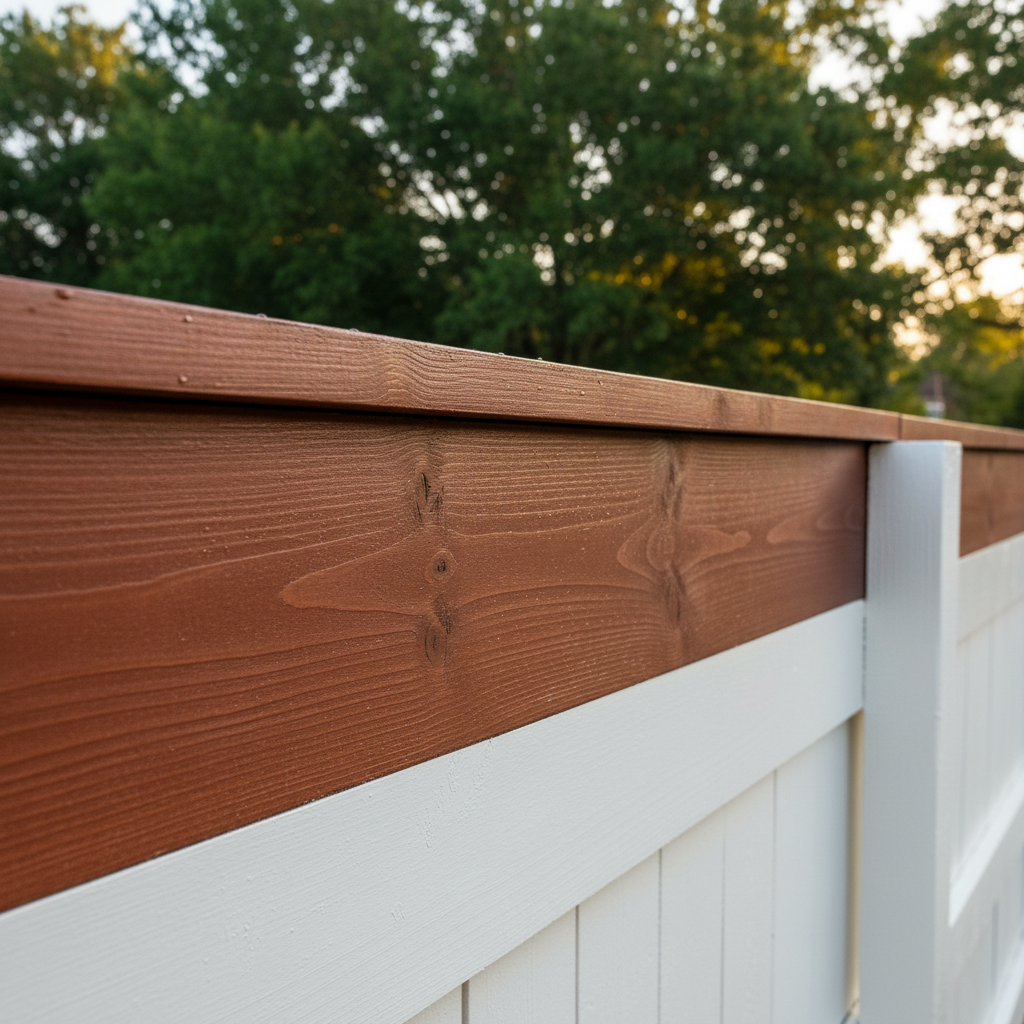
When you look at your wooden fence on a scorching July afternoon in New Braunfels, Texas, you might wonder if it is time to add some color. Property owners in Comal County ask New Braunfels Fencing Pros about this choice all the time. Between the blistering Texas sun and sudden downpours rolling off the Hill Country, fences take a heavy beating. Choosing between paint and stain is not just about picking a nice color. It is about whether you want to spend your next three weekends scraping and repainting, or put down something that actually protects the wood.
Before You Touch a Brush
Before you grab a roller for Fence Painting or Fence Staining, you need to check the condition of the wood. If your fence is brand new cedar or pine, you have to let it dry out. Most people do not realize that lumber from the yard is usually soaking wet with treatment chemicals or natural moisture. Pour some water on the boards. If it beads up, the wood is not ready for anything. You need water to sink right in. That usually takes a few weeks depending on how hot it has been lately. Next, you need a good power wash, but keep the pressure down. If you blast cedar too close, you will chew up the grain and turn a smooth fence into a fuzzy mess.
Paint vs Stain: The Texas Showdown
Paint looks sharp when it goes on. You get solid coverage and endless color options to match your house trim. But here is the catch. Paint forms a film on top of the wood. When New Braunfels humidity hits, and the temperature swings fifty degrees in a day, that wood expands and contracts. Paint does not move with it. Within a couple of years, you are looking at cracking, bubbling, and peeling. Once it starts peeling, you are stuck scraping the whole mess off.
Stain, on the other hand, sinks deep into the pores. It does not trap moisture underneath the surface. When the sun bakes your fence, a good oil-based semi-transparent stain fades gracefully instead of chipping off in ugly sheets. It highlights the natural grain while blocking out ultraviolet rays. New Braunfels Fencing Pros almost always points property owners toward stains for horizontal surfaces and pickets because maintenance is much easier. You just clean it and apply another coat a few years down the road without all the scraping.
DIY vs Calling a Pro
Can you do this yourself? Absolutely. If you have a weekend, a pump sprayer, and a back that does not mind bending over, staining a standard backyard fence is a solid project. Just make sure you protect your neighbor property and your own landscaping from overspray. A piece of cardboard or a shield helps protect the grass or flower beds while you are spraying.
However, there are times when you should just hand it over to a crew. If your fence is over six feet tall, surrounds a massive half-acre lot, or has weathered to a deep, dark gray, you are looking at a ton of prep work. Restoring badly weathered wood takes heavy-duty brighteners and chemical strippers that can burn your skin and kill your lawn if you do not know how to neutralize them. If you look at the job and feel overwhelmed, New Braunfels Fencing Pros is here for all your Fence Painting and Fence Staining needs.
After the Job Is Done
Once your fence is stained, give it a couple of days to fully cure before you lean heavy patio furniture against it or let the dogs scratch at it. Keep an eye on the south and west-facing sides of your yard. Those get the worst of the afternoon sun and will usually need a maintenance coat a year or two before the shaded side facing your neighbor yard does. Stay on top of it, and your fence will outlast half the houses on the block in the New Braunfels climate.